

We Are Losing the War on Corruption — Because We Are Fighting It With Tools From Another Era
We Are Losing the War on Corruption — Because We Are Fighting It With Tools From Another Era
Corruption in the Philippines has never been subtle. It is systemic, deeply networked, and protected by offices powerful enough to bend the law around themselves. Yet our approach to fighting it remains rooted in an outdated model of policing — one built for a world of paper envelopes and whispered conspiracies, not the digital pipelines of modern graft.
For decades, we have treated corruption almost exclusively as a physical crime: catch the official with a bag of cash, record the handover, stage a sting. But in the real world, very few officials are foolish enough to be caught on video stuffing bribe money into a briefcase. And so, year after year, congressmen and their bagmen escape prosecution, not because the innocence is clear, but because the evidence is archaically defined.
This is the greatest blind spot in our anti-corruption framework.
And it is costing the nation billions.
In an era when money moves through bank transfers, shell companies, remittance hubs, digital wallets, and offshore accounts, relying on contractor affidavits or entrapment videos is not simply inadequate — it is obsolete. Expecting a DPWH contractor to sign a sworn statement implicating a congressman is naïve at best, dangerous at worst. No one signs their own death warrant.
Meanwhile, the most powerful evidence is already sitting in plain view: the numbers.
Financial forensics, big-data analytics, electronic surveillance of money flows, and algorithmic red flags are the global standard. The United States learned this long ago. The FBI does not wait for a senator to be filmed accepting a duffel bag of cash. They prosecute based on patterns, discrepancies, and the quiet fingerprints of money. They follow bank trails, cross-match disclosures, trace beneficial ownership, and reconstruct timelines of financial behavior that no alibi can obscure.
Our institutions — the NBI, CIDG, Ombudsman, Sandiganbayan, DOJ — must learn from this approach. The war on corruption today is not fought in hotel lobbies or parking lots. It is fought on spreadsheets, servers, and encrypted ledgers.
Because corruption can hide behind influence, intimidation, and political machinery.
But it cannot hide from arithmetic.
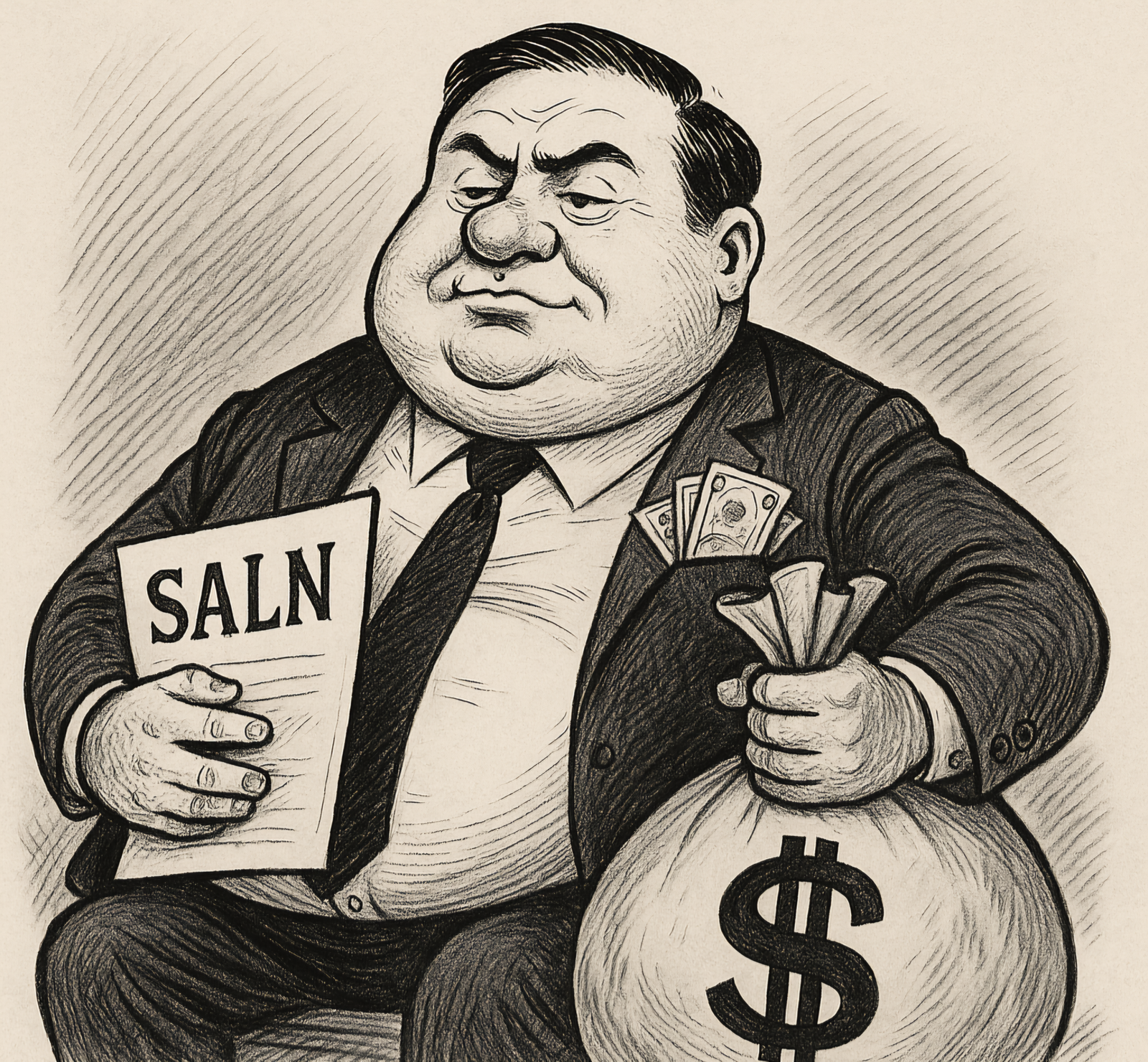
This caricature of a swollen, self-satisfied bureaucrat is not just satire. It is a reminder of every official whose wealth expands at a pace their lawful income cannot justify; every leader whose assets balloon while their annual salary remains static; every family empire funded by public contracts awarded to cronies.
The solution is simple — brutally simple:
Compare the SALN with the ITR.
Year by year. Peso by peso.
If assets surge but legitimate income stagnates, the numbers speak louder than any prepared statement. The math exposes what the rhetoric attempts to bury.
If the arithmetic doesn’t add up, investigate.
If guilt is proven, prosecute.
No exceptions. No sacred cows.
The moral clarity of numbers is our strongest weapon. Arithmetic never lies.
And it will always reveal what corruption works so hard to hide.
